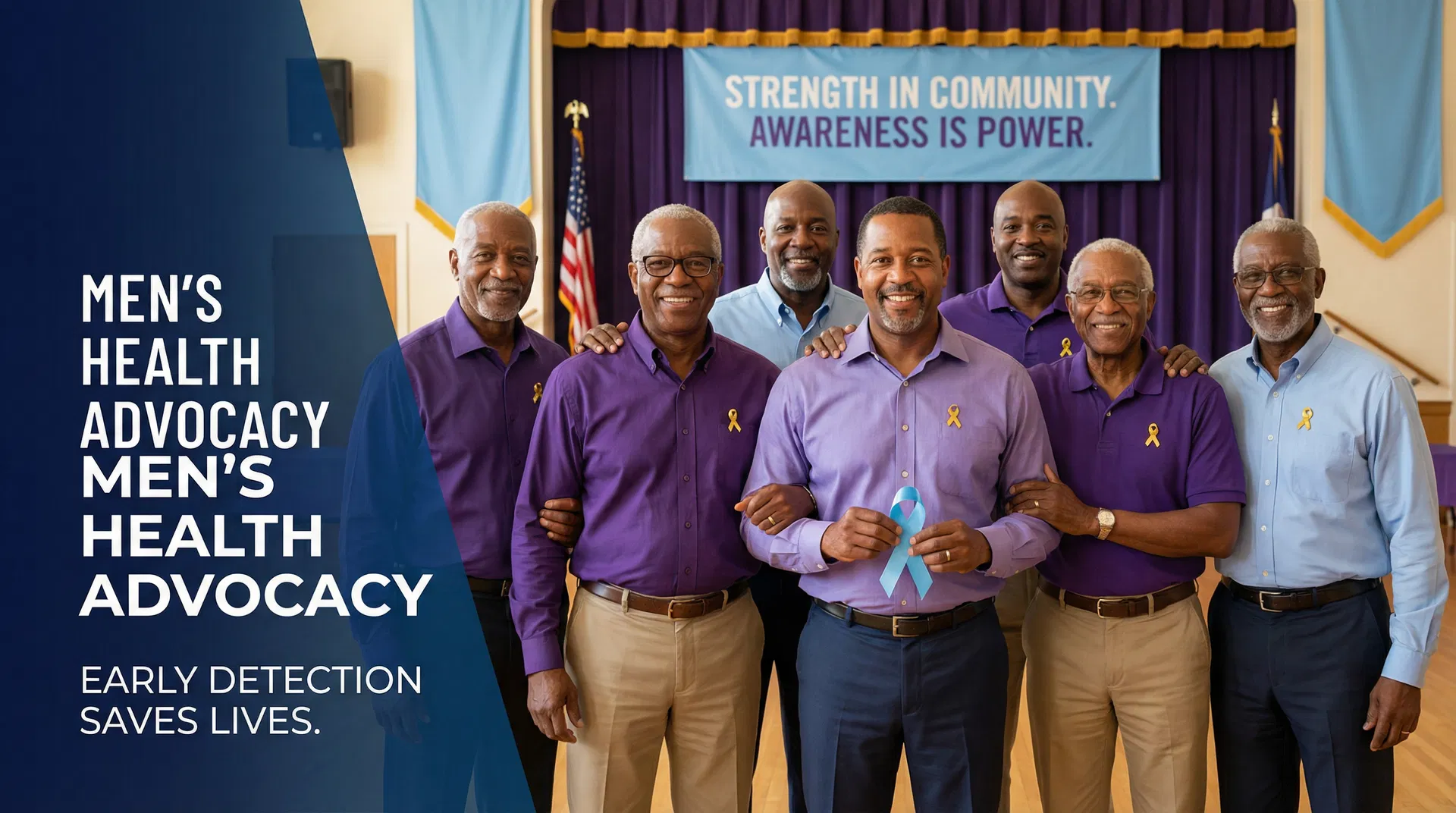
Know Your Risk. Save Your Life.
African American men face the highest risk of prostate cancer in the world. Early detection saves lives. Knowledge is power. Get screened.
From Survivor to THRIVER
Apostle Matthew L. Tillery is a Prostate Cancer Survivor and THRIVER who possesses a passion to educate other men concerning being proactive about their prostate health.
Matthew aims to empower men to research and educate themselves about their prostate health, so they can become self-advocates concerning treatment options. This passion opened a door for an invitation to serve as an Ambassador for Emanuel Health Education.
"When life becomes hectic, as it sometimes does, remember quitting is not an option — Keep Pedaling!"
— Apostle Matthew L. Tillery
Prostate Cancer & African American Men
The largest cancer health disparity in the United States exists in prostate cancer, with Black men facing significantly higher risk and mortality rates.
Black men will be diagnosed with prostate cancer
vs 1 in 8 for all men
More likely to be diagnosed than White men
67% higher incidence rate
More likely to die from prostate cancer than White men
36.9 vs ~18 deaths per 100,000
5-year survival rate when caught early
Drops to 38% if metastatic
2026 Prostate Cancer Facts — United States
New cases expected to be diagnosed in 2026
Men expected to die from prostate cancer in 2026
Prostate cancer survivors living in the U.S. today
Source: American Cancer Society, Cancer Facts & Figures 2025; ZERO Prostate Cancer
Why Are African American Men at Higher Risk?
Genetic Factors
Research shows that certain genetic variations more common in men of African descent may increase susceptibility to prostate cancer and contribute to more aggressive forms of the disease.
Later Diagnosis
Black men are more likely to be diagnosed at advanced stages, when the cancer has already spread. This is often due to disparities in access to healthcare and screening.
Healthcare Disparities
Systemic barriers including limited access to quality healthcare, lack of insurance, and implicit bias in medical settings contribute to delayed diagnosis and treatment.
Awareness Gap
Many men are unaware of their elevated risk or the importance of early screening. Education and outreach within the community are critical to closing this gap.
Screening Guidelines for Black Men
The Prostate Cancer Foundation recommends earlier and more frequent screening for Black men due to the elevated risk.
Start the Conversation
Consult with your medical provider about prostate cancer risk. Discuss family history, symptoms, and the benefits of screening.
Baseline PSA Test
Get a baseline PSA (Prostate-Specific Antigen) blood test. This simple blood test establishes your baseline and helps detect changes early.
Regular Screening
Depending on your PSA value and health status, annual screening is recommended. Regular monitoring catches changes early when treatment is most effective.
Source: Prostate Cancer Foundation Screening Guidelines for Black Men (2024), published in NEJM Evidence
Be Your Own Advocate
Don't wait for symptoms. Prostate cancer often has no symptoms in its early stages. Talk to your doctor, get screened, and encourage the men in your life to do the same. Early detection is the key to survival.
ZERO360 Cancer Support Helpline
1-844-ZERO360Free, comprehensive support for prostate cancer patients and families